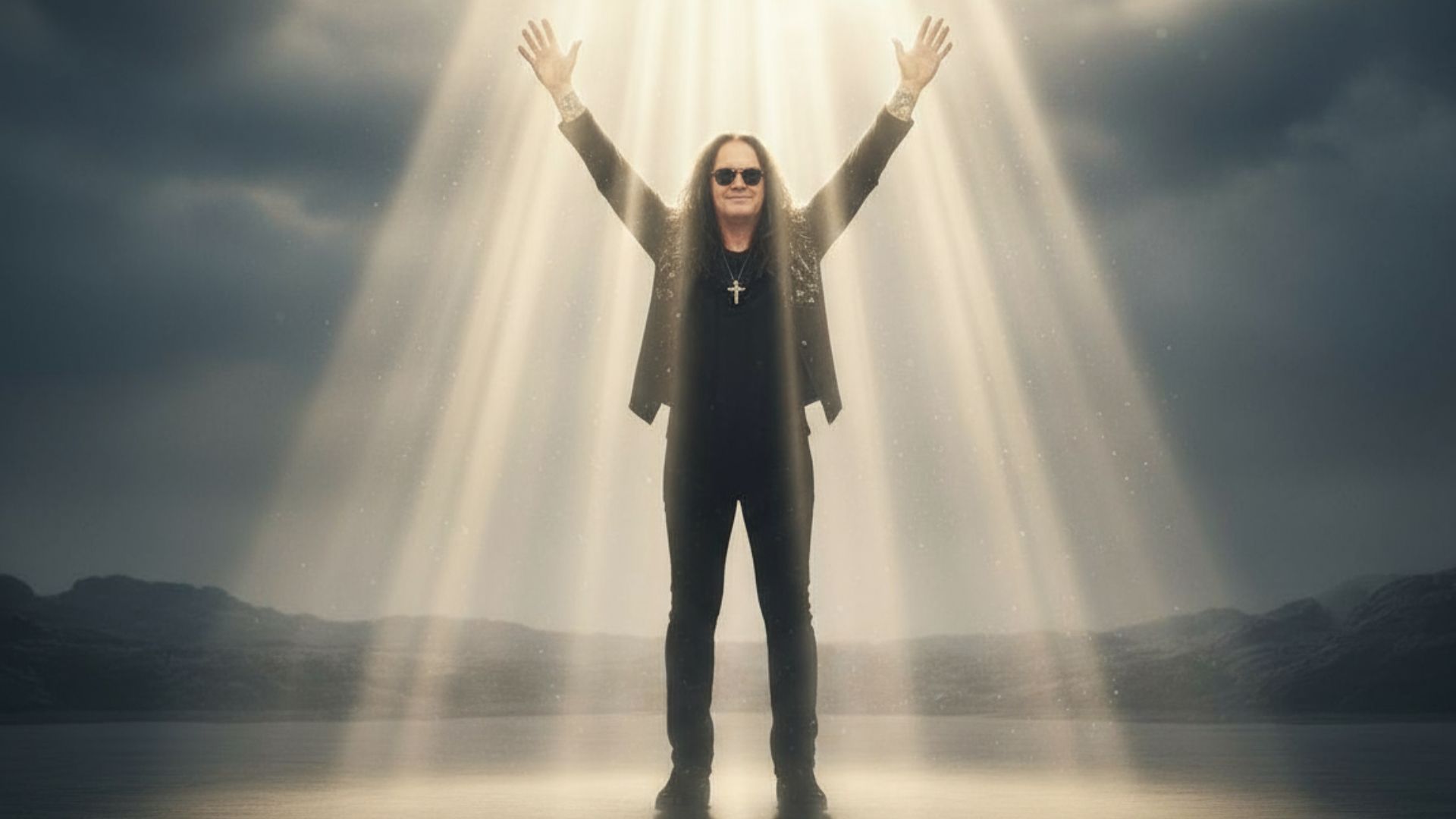
There are moments in music that silence even the loudest hearts. News of Ozzy Osbourne’s passing felt like that — a pause across the planet, a moment when the noise of the world dimmed, and only his voice remained, echoing somewhere between heaven and memory. For half a century, Ozzy was more than a rock legend; he was the living pulse of rebellion, chaos, and strange, beautiful survival. Now that he’s gone, the world feels quieter, but his music still roars.
To speak of Ozzy is to speak of contradiction — the darkness that somehow became light. His life was a storm, and yet, inside it, he built something eternal. Every scream, every trembling lyric, every wild onstage moment wasn’t just performance. It was confession. It was pain made melodic, madness turned into meaning. He was flawed, fragile, and unapologetically human — and that’s why millions saw themselves in him.
When the world called him The Prince of Darkness, he laughed, because he understood the irony. Ozzy was never about worshiping shadows; he was about surviving them. The demons he sang about were real, but so was his fight. Every recovery, every relapse, every return to the stage was a victory — not for fame, but for life itself. And that’s what made his art so alive: the defiance of mortality, the refusal to fade quietly.
In the days following his death, the world didn’t just mourn a rock star; it mourned an era. From the heavy riffs of Black Sabbath to the haunting tenderness of Dreamer, Ozzy’s voice stitched generations together — from those who grew up in smoky clubs to teenagers discovering his songs for the first time online. His lyrics, often written from pain and confusion, now read like prophecy. In a way, he’d been preparing us for this — not to grieve, but to remember.
What makes his story timeless isn’t just his music, but his humanity. Ozzy never pretended to be untouchable. He stumbled, he swore, he broke down — but he always came back. And that cycle of falling and rising became the rhythm of his legacy. He showed the world that even when your body weakens, your voice can still carry. Even when you lose control, your truth can still set others free.
Sharon once said that Ozzy was “the chaos that made sense.” It’s hard to imagine the silence she must feel now, after decades of living inside that storm. But perhaps that’s the beauty of it — Ozzy’s love, his humor, his madness, all live on in her, in their children, and in the millions who found strength in his songs. Death may have taken his body, but not his voice. It’s still here — in every speaker, every guitar solo, every heart that still beats a little faster when Crazy Train starts to play.
Maybe that’s what “the call from heaven” really means. Not an ending, but a change of frequency. Ozzy’s up there somewhere, laughing, maybe cursing, definitely singing. And down here, we’ll keep listening. Because legends don’t die — they just go on tour somewhere higher.
In the end, Ozzy Osbourne gave the world more than music. He gave us permission to be imperfect, to rage, to love, to live loudly. His death makes us cry, but his life makes us grateful. The world may have lost a man, but the music? The music will never stop.