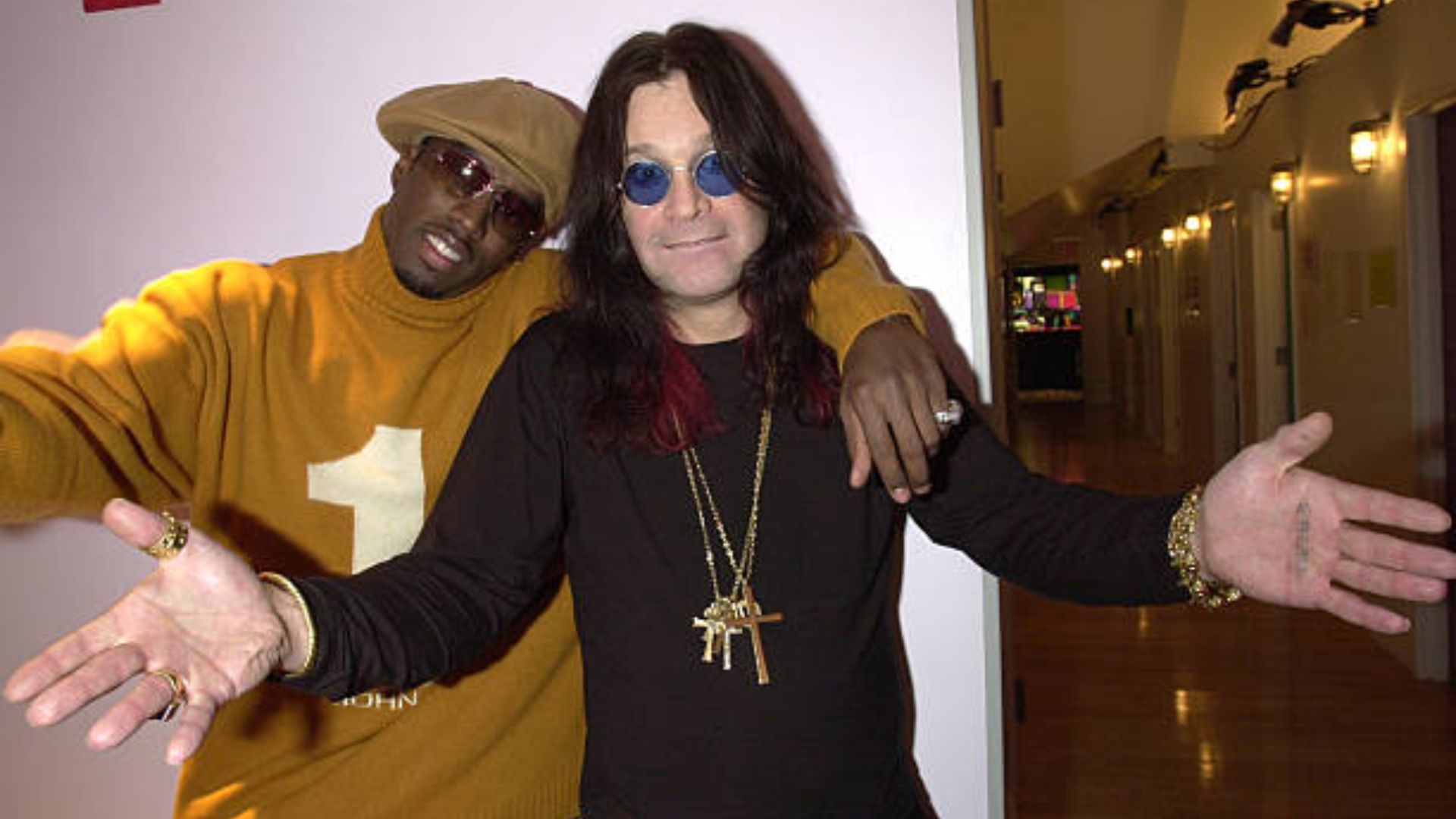
It’s strange how easily people throw around comparisons these days. A viral post recently called P. Diddy “The King of Hustle and Vision” and Ozzy Osbourne “The Prince of Darkness and Legend of Rock,” putting them side by side as if ambition and artistry belong on the same scale. But for anyone who has truly felt the thunder of Ozzy’s voice or lived through the chaos of his legacy, that comparison feels almost offensive — not because Diddy hasn’t built something remarkable, but because Ozzy didn’t build an empire out of business plans. He built one out of pain, passion, and pure survival.
Ozzy Osbourne isn’t just a musician — he’s a living contradiction that somehow makes perfect sense. He was broken and beautiful, wild and wise, lost and legendary. What he gave to music wasn’t something you could design in a boardroom. You can’t market madness. You can’t monetize raw humanity. You can’t replicate what happens when a man screams into the void and somehow creates art that millions of people see themselves in.
P. Diddy is a mogul. He’s strategy, hustle, and vision personified — and that’s fine. But Ozzy? Ozzy is soul. His career wasn’t built by empire, but by endurance. Every lyric, every scream, every stumble onstage was a piece of his truth. He didn’t rise because he had investors or PR teams; he rose because no one else on earth could sound like that — because he sang what pain actually feels like. His “brand” wasn’t calculated — it was carved out of the chaos of addiction, love, loss, and the refusal to die when the world said he should.
To compare that with Diddy’s business empire is to misunderstand what art really is. Diddy chased success — Ozzy survived it. Diddy built a kingdom — Ozzy built a legacy. And legacies don’t fade when the spotlight turns off. They echo. They haunt. They live in the riffs of guitars and the hearts of people who still whisper his lyrics at 3 a.m. when life feels too heavy.
When people call Ozzy “The Prince of Darkness,” it’s not just a title. It’s poetry. It’s a reflection of how he walked through every kind of darkness and somehow found light in it. There’s something sacred about that. His music doesn’t just play — it bleeds. When he sang “Crazy Train,” it wasn’t just about the sound. It was a warning, a celebration, and a confession all at once. Every time he hit the stage, he gave everything he had, even when he barely had anything left. That’s not entrepreneurship. That’s sacrifice.
To compare Ozzy to anyone based on fame, fortune, or influence is to forget why we fell in love with music in the first place. Music wasn’t meant to be measured in dollars or deals. It’s meant to make you feel. And Ozzy, through all the chaos and controversy, made us feel alive. He reminded us that imperfection could be beautiful, that pain could be poetic, and that rebellion could be art.
There’s a quiet kind of tragedy in how quickly modern culture reduces legends to metrics. How many albums sold, how many awards won, how many followers gained — but those numbers fade. What remains is what Ozzy left us: a reminder that real greatness doesn’t come from being polished, but from being real.
Ozzy Osbourne doesn’t need comparison because he exists beyond it. He didn’t compete; he created. He didn’t chase trends; he defined them. He wasn’t a man trying to control the chaos — he was chaos, turned into melody. And through every scandal, every stumble, every tear, he showed us something that no marketing genius ever could: that to truly live, you have to burn, fall, and rise again.
So let them call Diddy a hustler. Let them call him a visionary. But don’t ever mistake that for what Ozzy is. Ozzy Osbourne is proof that legends aren’t built — they’re born, forged in the fire of pain, and carried by a sound that refuses to die. Because while empires crumble and headlines fade, the voice of the Prince of Darkness still cuts through the noise — reminding us that the soul of rock will never, ever be for sale.