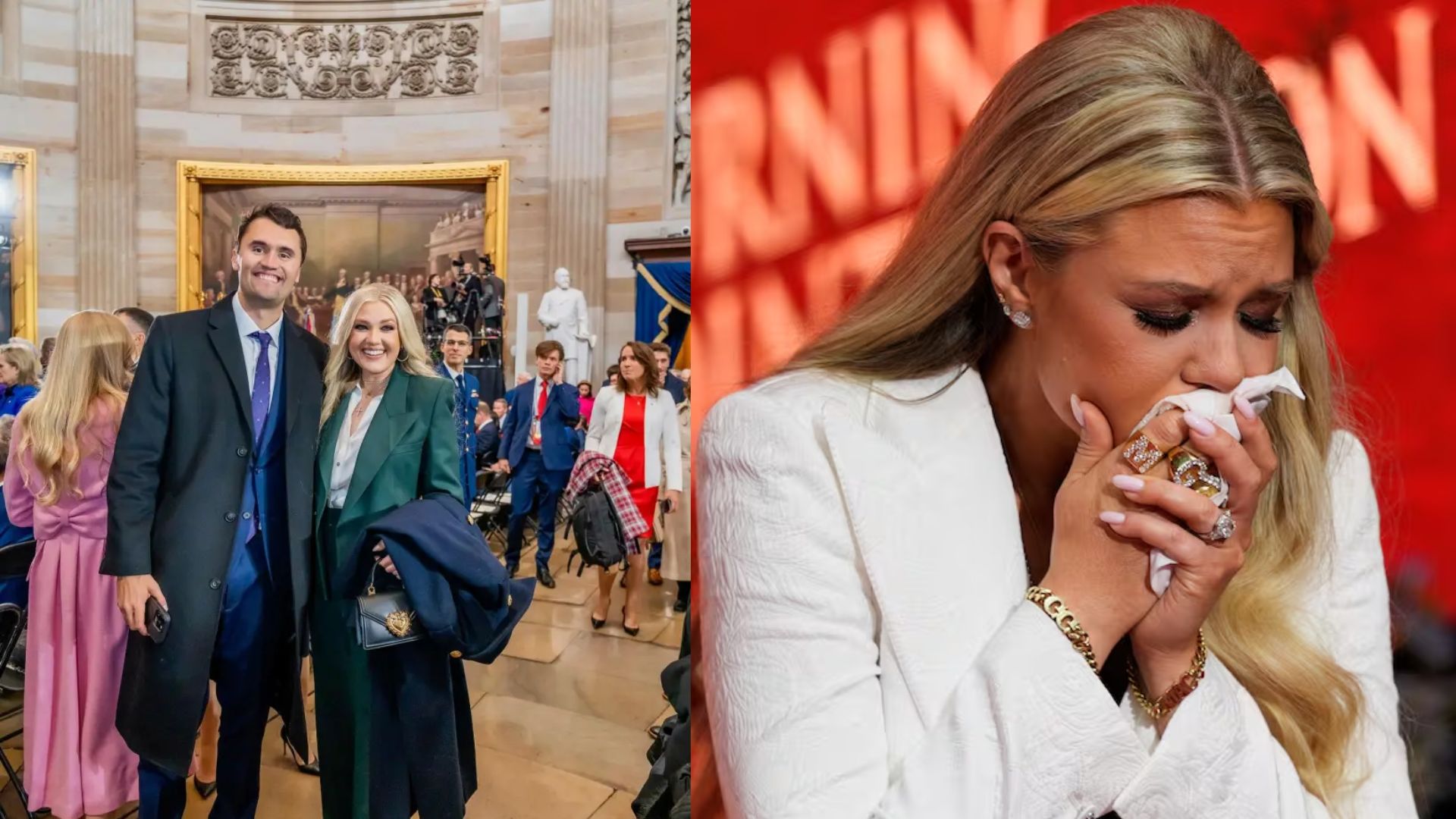
 When Charlie Kirk founded Turning Point USA in 2012, he envisioned an energetic youth-driven movement that would shake up conservative activism on college campuses. He led rallies, ran a popular podcast, and was a lightning-rod for medal of freedom, for a generation of young conservatives. Yet his story did not end with him. After his tragic assassination on September 10, 2025 at a Utah college event, the organization faced its moment of reckoning.
Enter Erika Kirk — former pageant winner, podcaster, faith-based entrepreneur, wife and widow of Charlie. Within days of his death, the board of TPUSA announced Erika would become the new CEO and Chair of the Board, fulfilling what Charlie had reportedly told leadership was his wish. The transition marked a dramatic shift — from the fiery young founder to a woman stepping into the spotlight under grief and expectation.
Erika’s public remarks have carried both sorrow and resolve. In her first major speech she declared: “The movement my husband built will not die. I refuse to allow that.” She also announced that the planned “American Comeback” college tour would continue this fall, vowing to fulfill her husband’s mission to mobilise young Americans.
Her background is multilayered: a former Miss Arizona USA (2012), an entrepreneur running a faith-based streetwear brand, a podcaster and college athlete. Her emergence as TPUSA’s leader comes at a fraught moment: the organisation saw a huge surge in student-chapter interest after Charlie’s death, with over 60,000 requests to start or join chapters reported.
What makes this next chapter so compelling is the interplay of legacy and transformation. Charlie Kirk’s style was bold, confrontational, high-energy. Erika enters with a different tone — one emphasising faith, family, and service. Observers note this may appeal particularly to young women, a demographic the movement sees as increasingly important.
Yet the stakes are high. Leading a large political organisation amid national mourning, reorienting its momentum without losing the fervour of its base, balancing performance and authenticity — Erika’s path is demanding. Many eyes are watching: supporters hoping for continuity, critics warning of a shift, and college students unsure what the identity of the movement will now become.
In the coming months, Turning Point USA will test its resilience: the college tour will proceed, podcasts and media outputs will carry on, and the organisation’s influence will be measured not just in rallies, but in retention of its message and ability to win hearts and minds.
Whether you view it as a legacy preserved or a new era launched, the story of Erika Kirk and Turning Point USA is a study in leadership borne from loss. The torch has been passed — now the question is how brightly it will shine.