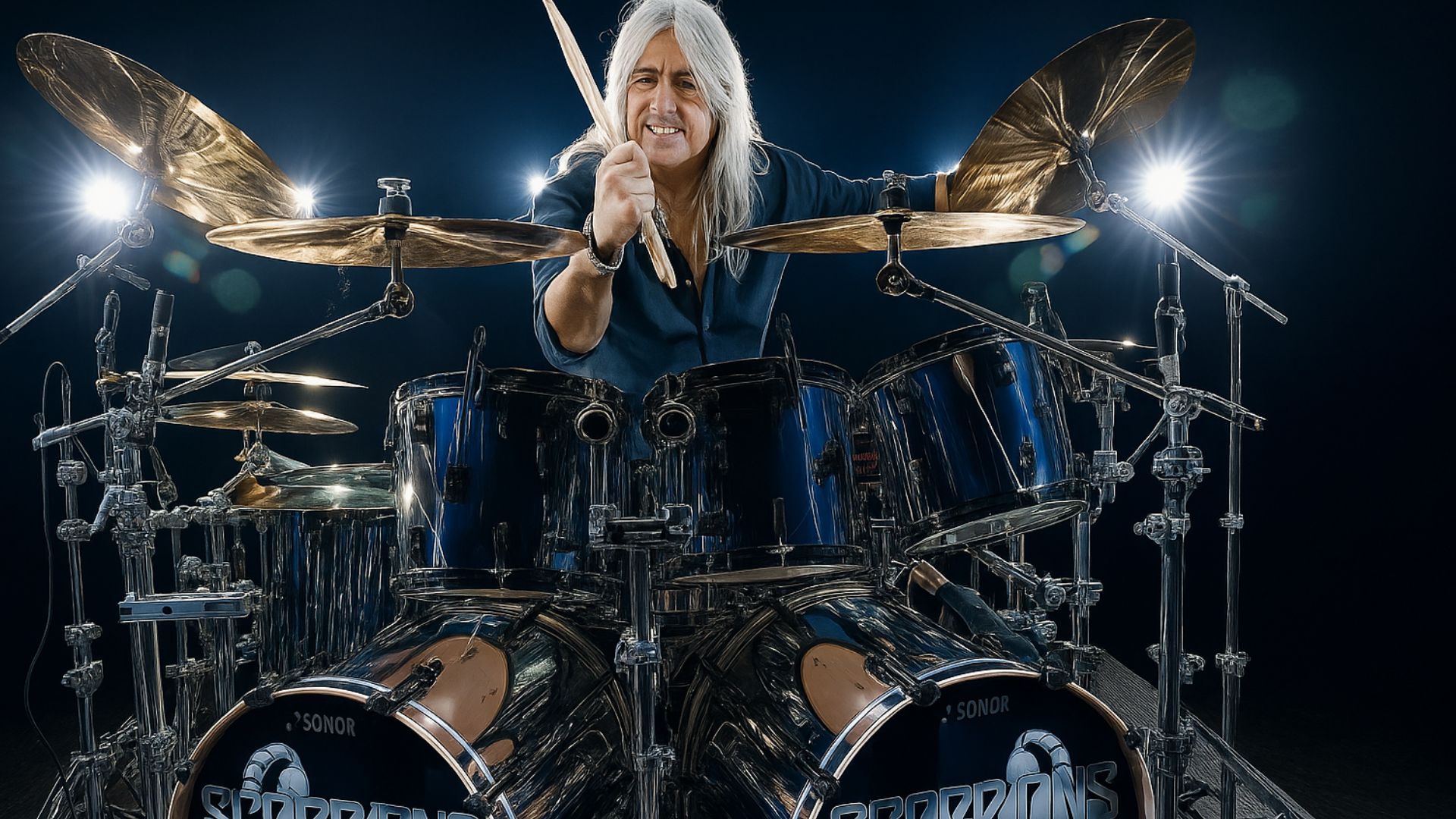
Sometimes it’s the fans who say it best. “Just when I thought Mikkey Dee couldn’t get any cooler,” one wrote, and that single sentence somehow captured everything about the man behind the drums. Because every time you think you’ve seen the full extent of his power, his fire, his sheer energy — he finds another gear, another spark, another moment that reminds you why rock music still matters. Mikkey isn’t just a drummer. He’s a force of nature disguised as a man, a storm wrapped in rhythm, the kind of artist who doesn’t just perform — he ignites.
Watching Mikkey play feels like witnessing time bend. Decades after he first made his mark, the fire still burns exactly the same. The hair might be grayer, the venues larger, but the spirit hasn’t aged a day. He hits every drum like it’s his first chance and his last breath all at once. You can see it in his eyes — that wild gleam, that childlike joy that somehow survived fame, exhaustion, and tragedy. It’s not nostalgia; it’s survival. It’s the sound of someone who never forgot what it meant to love music before it loved him back.
There’s something sacred in that kind of dedication. Mikkey Dee could have slowed down, played safe, let his legacy speak for him. But that’s not who he is. He’s the guy who still steps on stage with the same reckless hunger he had when he was playing smoky clubs and broken-down bars. You can feel that history in his rhythm — every crash of the cymbals carries stories of long nights, deafening crowds, and friends lost along the way. There’s Lemmy’s ghost somewhere in there, humming through the amplifiers, smiling at the chaos they once shared. And Mikkey keeps the promise alive. Every show, every beat, is a small resurrection of everything that made rock pure.
What makes him unforgettable isn’t just the noise or the fame — it’s the honesty. In a world of filters and algorithms, Mikkey remains stubbornly, gloriously real. He doesn’t chase trends or try to reinvent himself every five years. He doesn’t need to. He’s proof that authenticity never goes out of style. His drumming is raw emotion — you don’t just hear it, you feel it. It’s the heartbeat of rebellion, the soundtrack of resilience.
And maybe that’s why fans can’t stop saying it: “Just when I thought Mikkey Dee couldn’t get any cooler.” Because being cool isn’t about style or swagger — it’s about staying true when everyone else changes. It’s about living with the same fire you started with, even when the world moves on. Mikkey doesn’t try to be legendary. He just is.
There’s a moment every fan remembers: that first time they saw him play, maybe through grainy old footage or live from the front row. The sticks blur, the sweat flies, and for a second you forget where you are. All that exists is the rhythm — fierce, flawless, human. And then you realize that’s the magic. That’s what keeps people coming back decades later. The drums aren’t just an instrument. They’re an extension of who he is.
When Mikkey finishes a show, he doesn’t bask in the applause. He smiles, maybe nods to the crowd, and walks off quietly, as if he just did what he was born to do. No drama, no ego — just purpose. That’s rare. That’s the kind of cool you can’t fake, the kind that doesn’t fade with time. Fans feel that. They see it. And in those small, electric moments, they understand they’re not just watching a musician — they’re watching a legacy still being written.
So yes, the fans said it best. Just when we think Mikkey Dee couldn’t get any cooler, he reminds us what real music sounds like when it’s played by someone who never stopped believing in it. It’s the kind of cool that doesn’t come from fame or money, but from the heart of someone who lives for the crash of the drums, the roar of the crowd, and the unshakable truth that rock and roll never dies — not while people like Mikkey Dee still carry the flame.
Because legends don’t fade. They just keep playing.