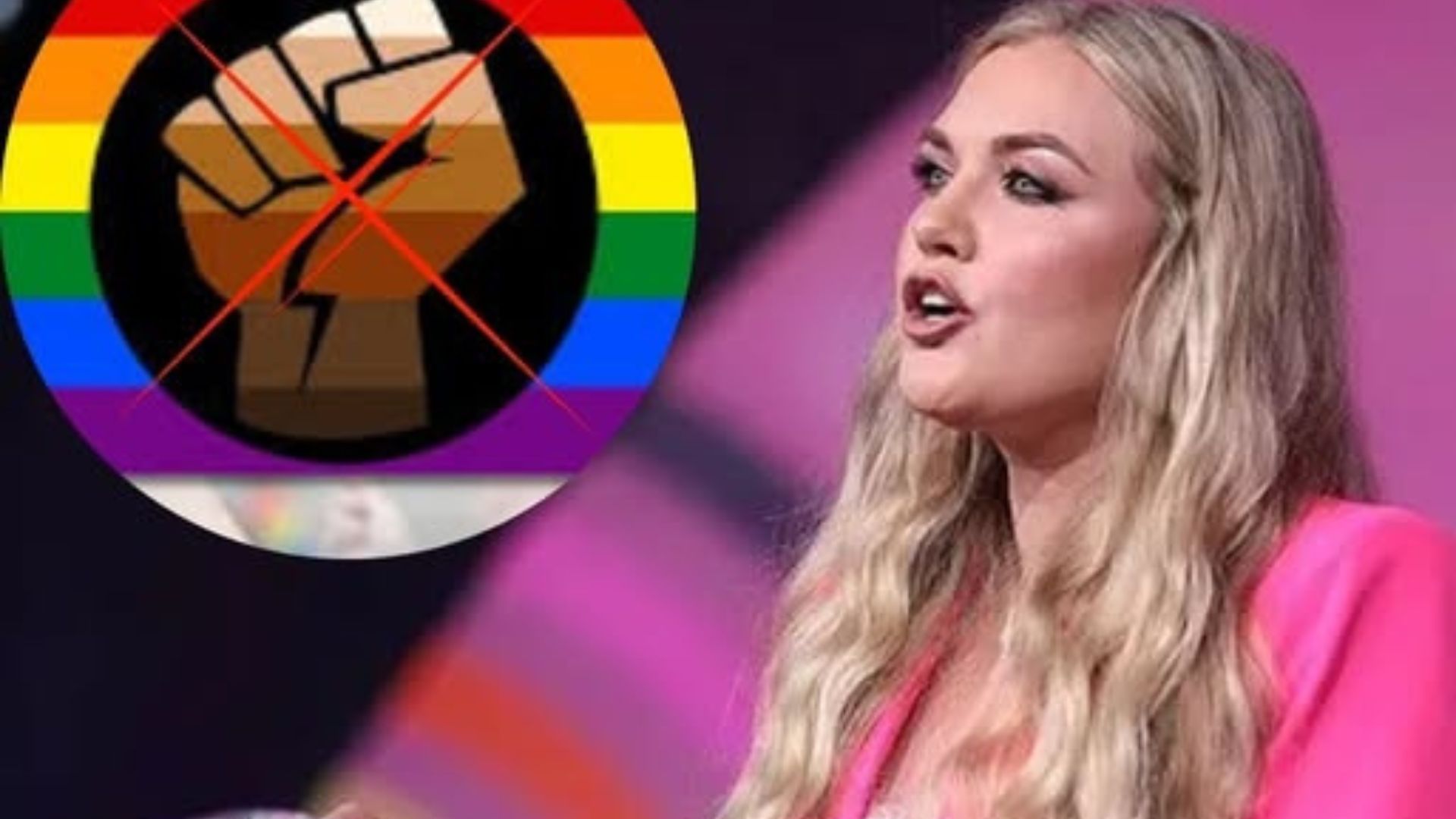
Just moments ago, an unexpected act of quiet defiance sent shockwaves across the United States. Erika Kirk — wife of the late conservative commentator Charlie Kirk — became the center of a nationwide firestorm after refusing to wear a rainbow patch symbolizing solidarity with the LGBTQ community, just minutes before stepping onto a live television set.
It was supposed to be a standard primetime appearance — polished, prepared, and professional. But when a production assistant approached her backstage, holding the colorful patch meant for all guests to wear on-air, Erika’s response was simple. She smiled, placed a hand over her heart, and gently declined. No speech, no confrontation — just silence. Then, she walked toward the stage lights.
Inside the studio, witnesses described the moment as “unbelievably tense” — a rare kind of silence that seemed to vibrate through the air. Some producers exchanged shocked glances; others reportedly whispered, “Did she just say no?” Yet what came next wasn’t outrage — it was stillness. Even those who disagreed couldn’t deny the weight of what they had just seen.
When the cameras started rolling, Erika appeared poised, her composure unshaken. Her refusal to participate in the symbolic gesture — one now deeply tied to political and cultural debates — instantly transformed her appearance into one of the most talked-about television moments of the year. Within minutes of airing, clips of her quiet stand flooded X (formerly Twitter), TikTok, and Instagram, amassing millions of views. The hashtag #ErikaKirk trended worldwide within the hour.
Many viewers praised her courage. One comment read: “You don’t need to shout when your convictions speak louder than any slogan.” Another wrote, “Erika Kirk just reminded the world that freedom means choice — even when it’s unpopular.” Others, however, condemned the gesture as “divisive” or “disrespectful,” arguing that the patch was meant to symbolize unity rather than ideology.
Erika has not yet released an official statement, but those close to her say the decision reflects a deeply personal conviction rather than an act of defiance. A family friend told reporters, “Erika isn’t interested in stirring controversy — she’s interested in staying true to herself. She believes compassion doesn’t need to come with conditions or symbols.”
For many Americans, the moment carries an even deeper resonance because of who Erika is — the widow of Charlie Kirk, whose death earlier this year sparked waves of tributes across political, faith-based, and media communities. Charlie was known for his unapologetic advocacy for traditional values, personal freedom, and faith-driven integrity. Erika has largely remained out of the public eye since his passing, focusing on charitable work and projects aimed at promoting unity through service.
And yet, with one simple act — choosing not to wear a patch — she’s found herself back in the national spotlight. Some commentators have compared her moment to historic acts of silent resistance in American media, moments when silence carried more meaning than a thousand words. Others argue it’s a sign of how polarized public discourse has become — where even the smallest gesture can become a battlefield.
Television insiders say the network is still deciding how to address the incident publicly. Some crew members reportedly applauded Erika after the segment ended, while others expressed frustration at what they saw as a lost opportunity for “visible solidarity.”
But beyond the cameras and social media reactions, the question now isn’t about the patch itself — it’s about what it represents. Was Erika’s refusal an act of faith? A quiet protest against performative virtue? Or simply a woman standing in her truth, unwilling to conform to expectations that felt insincere?
Whatever the answer, one thing is certain: Erika Kirk didn’t shout, argue, or grandstand. She simply stood still — and in doing so, ignited a nationwide conversation about authenticity, conviction, and what it really means to believe in freedom.
As debates continue to rage online, the public waits to hear from Erika herself. Will she explain her choice, or will she let the silence continue to speak for her?
In an age where outrage is instant and conformity is often rewarded, Erika Kirk’s quiet defiance may have just reminded America of something it’s been missing — the power of standing still.