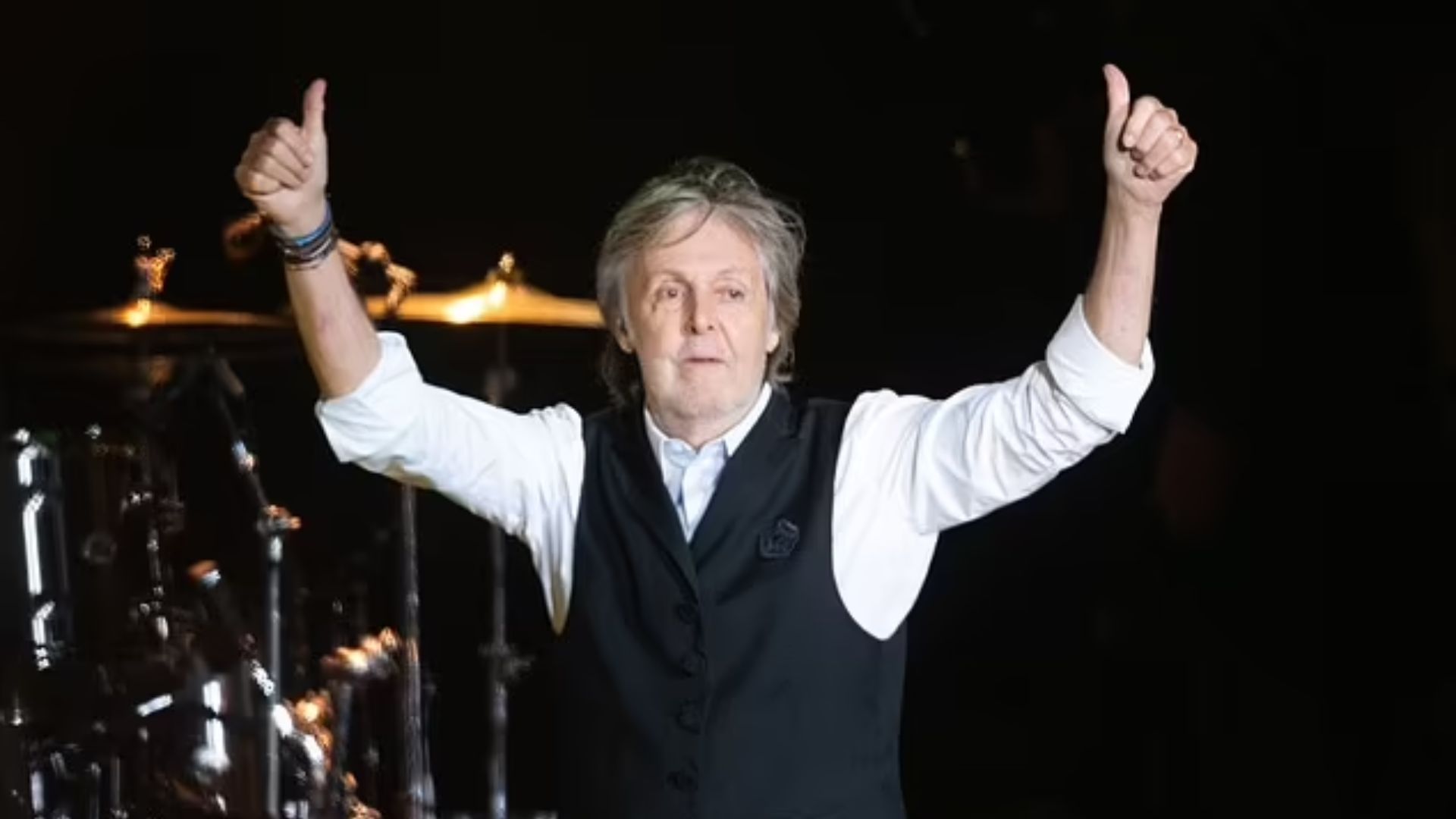
Eighty-three years. A lifetime of sound, melody, and movement. Paul McCartney isn’t just a musician celebrating another birthday — he’s a living chapter of music history. From the rock stages of Liverpool to the shimmering echoes of disco dance floors, from tender ballads to experimental symphonies, his journey reminds us that real artists never belong to one era or one genre. They become the rhythm of every generation.
When The Beatles began in the early 1960s, the world didn’t yet know it was about to change. McCartney’s melodies carried both simplicity and soul — songs like Yesterday and Hey Jude turned emotion into anthem, giving the ordinary human heart a voice. He didn’t just write about love; he translated its sound. Every chord felt honest, every lyric timeless. In those years, McCartney helped define what pop and rock could be: not just catchy, but eternal.
But even after The Beatles ended, Paul never stood still. While others faded into memory, he kept chasing new sounds — and in doing so, he captured new worlds. In the 1970s, as disco lights began to flash across the globe, McCartney didn’t resist the change. He listened. He absorbed. And with songs like Goodnight Tonight (1979), he gave us something magical — not pure disco, but a bridge between rhythm and melody. The song shimmered with dance energy: a pulsing bassline, a funky groove, his voice gliding between rock roots and disco sheen. It wasn’t imitation; it was transformation. Paul took the pulse of the dance floor and made it his own.
To understand why this mattered, you have to understand what disco was. Born in the clubs of New York and Philadelphia, disco was freedom — a heartbeat for those who needed to be seen and heard. It was movement against monotony, rhythm against repression. In the age of glitter and grooves, music wasn’t just for listening; it was for living. And while many rock artists dismissed disco as a passing trend, Paul McCartney recognized its heart — its desire to connect people through sound. Goodnight Tonight proved that even a Beatle could find beauty in the beat of change.
Yet disco was only one stop on his endless journey. Through the decades, McCartney has danced effortlessly between genres: the rock foundations of Band on the Run, the soft introspection of My Love, the experimental spirit of Temporary Secretary, the orchestral depth of Liverpool Oratorio, and even the modern pop collaborations with Kanye West and Rihanna in FourFiveSeconds. Few artists have lived long enough — and stayed curious enough — to explore so much without losing themselves. But Paul’s secret has always been love. Love for melody, love for music, love for life itself.
That’s why, at eighty-three, his music still breathes. He never chased youth — he created it, over and over again. His songs have aged the way sunlight does: always changing, never dimming. When he performs Let It Be today, the world sings along not because it’s old, but because it’s true. When he plays Hey Jude, generations that weren’t even born when it was written still feel like they belong to it. That’s not nostalgia. That’s universality.
Paul McCartney’s career isn’t just a timeline — it’s a symphony of eras. He has lived through the rise of rock, the shimmer of disco, the pulse of pop, and the waves of electronic and indie rebirth. And somehow, he never once lost his melody. Each era found its reflection in him, reshaped by his touch, softened by his heart. He reminds us that music isn’t about staying in one place. It’s about growing, exploring, reinventing — and still remembering who you are.
So today, as Paul McCartney turns eighty-three, we celebrate not just the man, but the rhythm he gave the world. He taught us that sound can heal, that melody can transcend time, and that even the loudest beat means nothing without soul. His journey — from the boy with a guitar in Liverpool to the legend who danced through every style — is proof that music, when made with sincerity, never truly grows old.
Happy birthday, Sir Paul.
Thank you for reminding us that every generation has its sound — but the song of love, imagination, and hope will always carry your name.