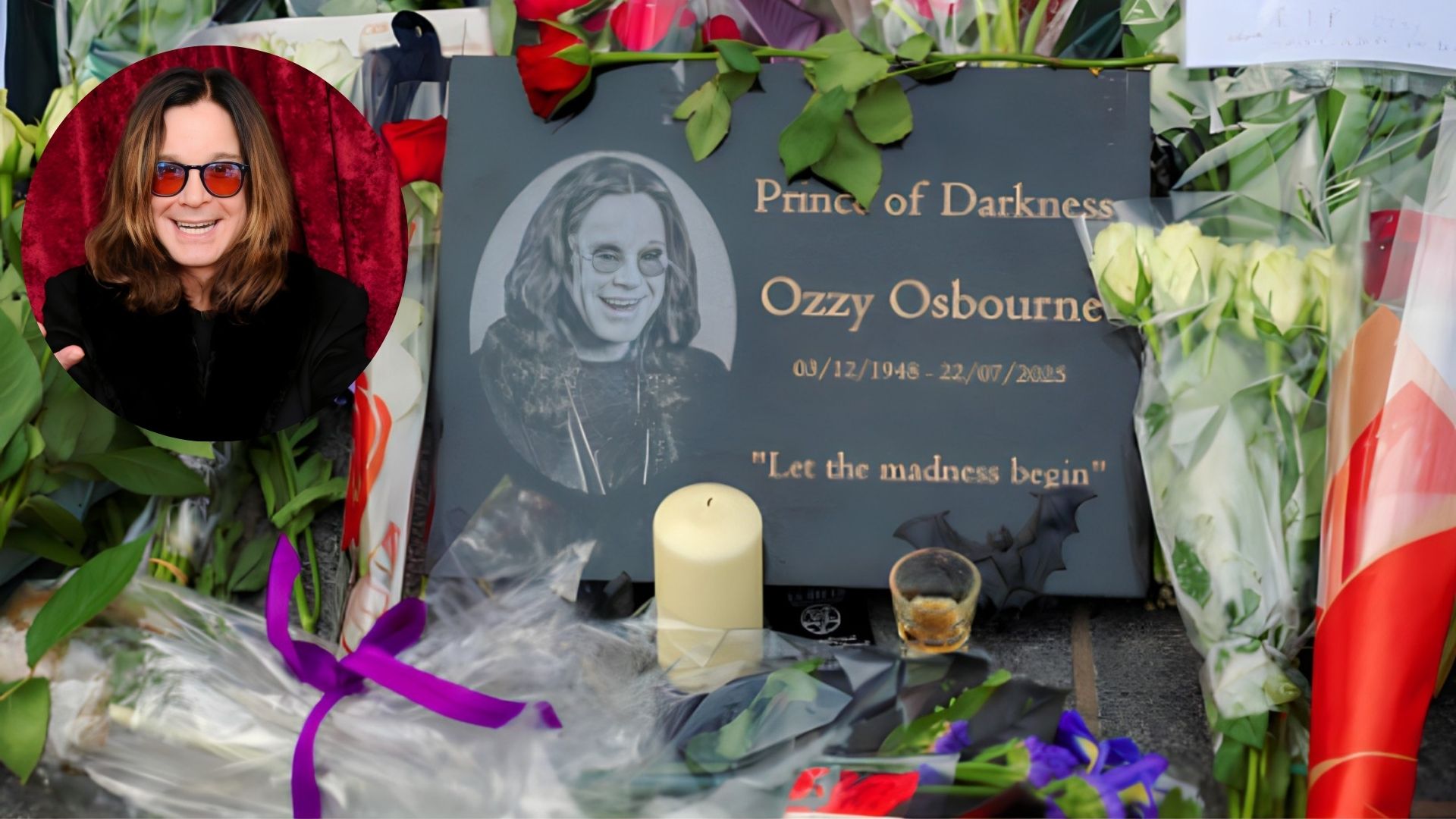
Ozzy Osbourne is more than a rock legend — he’s an institution of rebellion, resilience, and raw humanity. For over five decades, his life has been a wild symphony of chaos and creation, a saga that turned pain into power and madness into music. Few figures in the history of rock have embodied contradiction as beautifully as Ozzy: unpredictable yet grounded, outrageous yet deeply loved, destructive yet indestructible.
From his earliest days in Birmingham, England, Ozzy’s story was destined to be different. He grew up in a working-class neighborhood, surrounded by factories and monotony, yet his dreams were anything but ordinary. When he and a few local musicians formed Black Sabbath in 1968, they didn’t set out to invent a new genre — they just wanted to play something that felt real. What came out of that ambition was nothing short of revolutionary. The band’s heavy riffs, dark imagery, and haunting atmosphere gave birth to heavy metal.
Ozzy’s voice — eerie, emotional, and unmistakably his own — became the sound of rebellion. Songs like War Pigs, Paranoid, and Iron Man captured the rage and disillusionment of a generation, but also something more: a strange kind of hope hidden beneath the noise. He wasn’t singing about evil; he was confronting it. In that contradiction lay the secret to his enduring magic.
When his time with Black Sabbath came to an end, many assumed his career was over. But Ozzy, being Ozzy, refused to fade. His solo career exploded with Blizzard of Ozz in 1980, a record that remains one of rock’s greatest debuts. With the brilliant young guitarist Randy Rhoads, Ozzy found a new voice — one that was melodic yet menacing, powerful yet playful. Songs like Crazy Train and Mr. Crowley weren’t just hits; they were declarations. They proved that even outside the band that made him famous, Ozzy was a force no one could contain.
Tragedy struck in 1982 when Randy Rhoads died in a plane crash, a loss that shattered Ozzy. Many thought he would never recover. But again, he transformed pain into purpose. Each album that followed carried a piece of that loss, a reflection of a man constantly fighting his demons yet refusing to surrender to them.
Offstage, Ozzy became notorious for his wild antics — from biting the head off a bat to battling decades of addiction. His legend grew not only because of his music but because he lived like one of his songs: loud, fearless, and full of chaos. Yet what kept fans devoted wasn’t just the madness — it was the heart beneath it.
That heart was fully revealed to the world in the early 2000s with The Osbournes, MTV’s groundbreaking reality show. Suddenly, the Prince of Darkness was a family man on camera, bumbling through domestic life with his sharp-witted wife Sharon and their kids, Jack and Kelly. It was funny, chaotic, and strangely wholesome. Fans saw the real Ozzy — confused, loving, hilarious, and incredibly human. He wasn’t just a metal god anymore; he was everyone’s favorite rock dad.
In the years that followed, time and health began to test him. Ozzy faced multiple surgeries, Parkinson’s disease, and long recoveries that would have silenced anyone else. But not him. Instead, he returned to the studio with renewed purpose. His 2020 album Ordinary Man was a heartfelt reflection on mortality, filled with emotion, regret, and gratitude. The songs — Under the Graveyard, Goodbye, and the title track — revealed an artist who had made peace with his past while still burning with creative fire.
What keeps Ozzy Osbourne relevant after fifty years isn’t just nostalgia — it’s authenticity. In an age of polished perfection, he remains beautifully imperfect. He’s made mistakes, admitted them, laughed at them, and kept going. That honesty is rare, and it’s why generations of fans — from the first Sabbath listeners to Gen Z rockers — still find something real in him.
His influence runs through every corner of rock and metal, from Metallica to Slipknot, and his voice still echoes through speakers worldwide. But beyond his sound, Ozzy represents something far greater: the survival of spirit. He is proof that life, no matter how chaotic, can still be art — that even the darkest souls can find light if they keep singing.
At 76, Ozzy Osbourne remains a living contradiction — frail yet fierce, tired yet timeless. He’s not just the “Prince of Darkness.” He’s the King of Endurance, the man who outlived the myths, the critics, and even his own chaos.
Because in the end, Ozzy’s greatest gift isn’t just his music — it’s his message:
You can fall. You can break. You can lose everything.
But if you keep fighting, if you keep believing, you’ll rise again.
And maybe, just maybe, you’ll live forever.