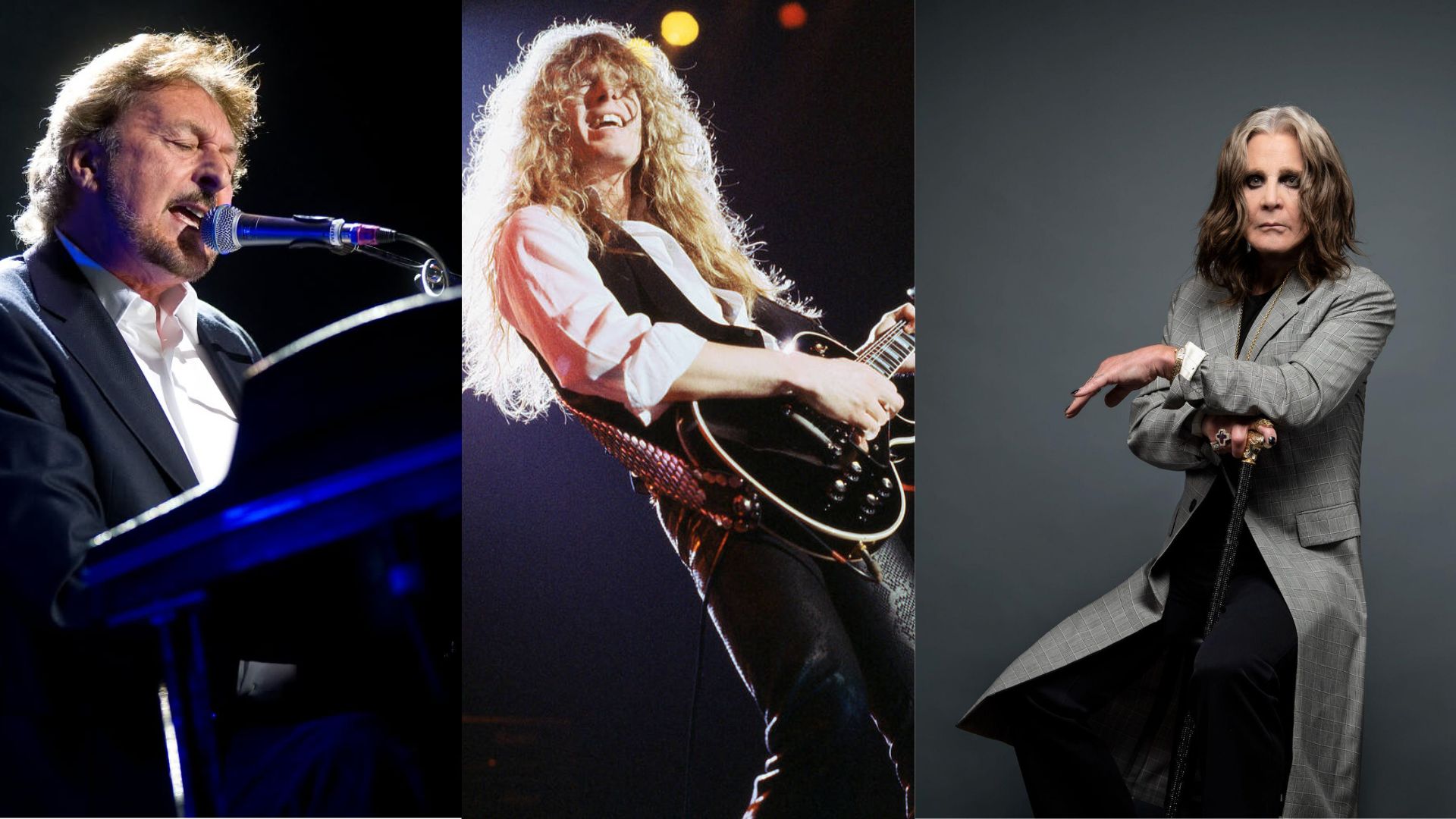
There are years that test the soul of music — years that remind us just how fragile greatness can be. This year was one of them. A wave of silence swept through the world of rock, leaving behind memories, records, and echoes of rebellion. One by one, the legends who shaped the soundtrack of generations took their final bow: Ozzy Osbourne, Ace Frehley, Rick Derringer, Terry Reid, John Sykes, Mick Ralphs, George Kooymans, Joey Molland, Wayne Osmond, and Rick Davies. Ten names that once lit up arenas, that turned noise into art, that made chaos sound like home.
Ozzy Osbourne, the eternal Prince of Darkness, defined the impossible. From the haunted riffs of Black Sabbath to the fire of his solo career, Ozzy was more than an icon — he was an era. Every time he stepped on stage, he carried the wild heart of rock with him. His passing this year didn’t silence that voice; it only proved what he always said: “You can’t kill rock ‘n’ roll.”
Ace Frehley, the original Spaceman of KISS, turned his guitar into a rocket ship. He didn’t just play — he launched audiences into orbit. With that mischievous grin and cosmic energy, he reminded the world that rock was meant to be larger than life. The riffs he left behind still feel like sparks burning through time.
Rick Derringer, the blues-rock warrior, brought a different kind of fire — raw, soulful, human. Whether with Johnny Winter or in his own fiery solo work, he carried the DNA of American rock. His guitar cried and laughed in equal measure, and now it whispers from the records he left us.
Then there was Terry Reid — the voice that could have fronted Led Zeppelin, but chose to walk his own path instead. His sound was smoky, free, and defiantly unique. Terry didn’t chase fame; he chased feeling. That’s why those who knew his music never forgot him.
John Sykes gave rock its electric heartbeats in Whitesnake and Thin Lizzy. His solos were lightning bolts — melodic, technical, but always emotional. He didn’t play notes. He told stories, screamed through strings, and made every guitar line feel like confession.
Mick Ralphs was the sound of British cool. Bad Company, Mott The Hoople — he brought swagger and sincerity to every note. His guitar was both smooth and sharp, the kind of sound that never ages.
George Kooymans of Golden Earring wrote one of rock’s greatest anthems — “Radar Love.” The song was more than a hit; it was freedom on wheels. With his passing, we don’t just lose a songwriter — we lose the heartbeat of a thousand midnight drives.
Joey Molland, one of the last of Badfinger, carried the bittersweet glow of a band that defined the art of melody and melancholy. His harmonies were gentle but deep, his songs drenched in the innocence of a time when music still believed in magic.
Wayne Osmond, often seen as the wholesome side of fame, was proof that rock could have heart without losing its fire. The Osmonds’ harmonies shaped pop culture, and Wayne’s voice carried a quiet sincerity that still touches fans today.
And finally, Rick Davies of Supertramp — the keyboard poet of introspection. His music didn’t just fill stadiums; it filled minds. Songs like “The Logical Song” and “Goodbye Stranger” weren’t just chart-toppers. They were reflections, reminders that art could question and heal at the same time.
Ten names. Ten flames. Together, they built the architecture of rock’s soul. And though their instruments have gone quiet, their energy hums through every speaker, every dive bar jukebox, every kid picking up a guitar for the first time.
This wasn’t just a year of loss. It was a reminder — of what they gave us, of what we still have, and of why music endures when people don’t.
Because rock never really dies. It just changes form. It becomes memory, heartbeat, legacy.
And somewhere out there, under the eternal feedback of the universe, you can still hear them — jamming in the stars.